
TLDR
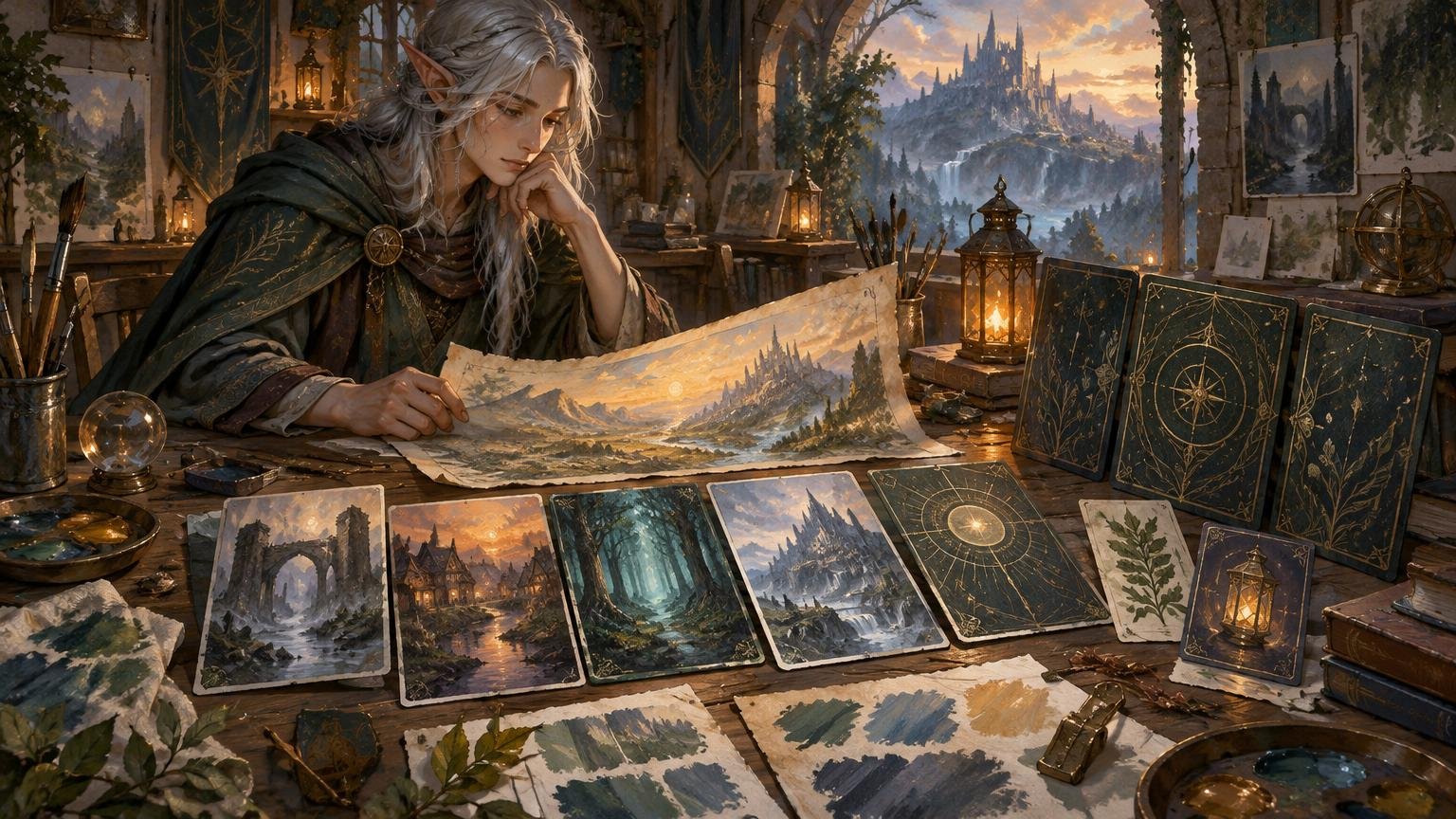
Start with a deck that already plays well, then give it one visual language built around journey, memory, restrained fantasy magic, and changing relationships. A successful custom frieren mtg proxy deck should not be 100 unrelated character portraits. Establish a palette, assign visual families to gameplay roles, reserve character art for important cards, and use landscapes, objects, spell effects, and quiet environmental scenes elsewhere. Plan backs and double-faced cards early, track artwork permissions and revisions, and proof everything at actual card size before production.
This is a clearly unofficial fan project, not an official Frieren and Magic: The Gathering collaboration. The useful creative starting point is the story’s contrast between an elf mage’s long life and her growing effort to understand the people around her, as summarized by the official VIZ series page. That suggests a deck-wide direction with more depth than simply placing recognizable faces on popular cards.
Begin with a one-sentence art direction brief
Write the visual rule before collecting images. A practical brief might be: “A reflective high-fantasy travel journal using cool twilight landscapes, warm memory scenes, restrained magical light, and recurring botanical details, with every card remaining identifiable across the table.” That sentence gives you a palette, atmosphere, subject mix, motif, and readability standard.
Keep the brief narrow enough to reject attractive images that do not belong. If one illustration is saturated action anime, another is painterly storybook art, and a third resembles a polished game screenshot, shared subject matter will not make them feel like one deck. Choose an image treatment and apply it consistently. The broader process in choosing a visual direction for a full alternate-art deck can help turn the brief into repeatable rules.
Choose the deck structure before assigning characters
Do not begin by matching Frieren characters to random Magic cards. Start with a legal or house-approved deck structure you enjoy playing. The same art direction can support Commander, a casual constructed deck, a Cube module, or a smaller themed package of lands and tokens. Each format changes how often an image appears and how much visual repetition the project can tolerate.
Identify gameplay roles first: signature legend, supporting creatures, removal, protection, card advantage, mana development, utility lands, and generated tokens. Character mappings then become editorial choices rather than claims that a particular Magic card is the only canonical match.
| Card family | Visual job | Possible Frieren-inspired treatment |
|---|---|---|
| Signature cards | Carry the project’s strongest identities | Focused character compositions, distinctive border accents, or a brighter magical treatment |
| Supporting creatures | Show relationships and party structure | Character scenes, paired compositions, travel moments, or mentor-and-student imagery |
| Instants and sorceries | Represent action without adding more portraits | Spell diagrams, magical light, weather, motion, artifacts, or environmental effects |
| Artifacts and enchantments | Build history and texture | Books, keepsakes, staffs, ruins, jewelry, statues, or remembered places |
| Lands | Establish geography and pacing | Roads, towns, forests, mountains, ruins, and changing times of day |
| Tokens and emblems | Communicate generated game pieces quickly | Simplified silhouettes, dedicated token frames, and strong type labels |
Map characters by gameplay role, not name alone
Treat every assignment as an interpretation. A recurring value engine could represent patience, accumulated knowledge, or long-term memory. Precise interaction could use tightly framed spell imagery. A resilient combat creature might receive a protective or determined scene. A card that returns something from the graveyard might use a visual metaphor for remembrance rather than a literal character portrait.
Frequency matters. A commander or signature card can support a dramatic close-up because it anchors the deck. A four-copy spell in a casual constructed list may work better as an object or magical motif, preventing one face from dominating every hand. In Cube, recognizable visual categories are especially useful because cards must be drafted and read outside a single deck’s context.
Make the deck feel like one world, not a screenshot folder
Use a controlled subject mix. As a starting point, reserve portraits and major character scenes for legends and high-impact creatures. Let spells carry light, motion, and magical geometry. Give artifacts books, keepsakes, tools, or relic-like objects. Use lands to provide breathing room through roads, distant architecture, forests, and quiet skies.
Repeated motifs create continuity without making every card identical. You might reuse pale blue magical light, pressed flowers, circular spell forms, weathered paper textures, or a thin gold line around memory-related cards. Pick two or three motifs, not ten. Variation should happen inside a stable system.
Set rules for palette, crops, borders, and text-safe areas
Build a small palette with defined jobs. For example, cool blue-gray could dominate travel and present-day scenes, while muted gold marks memories or signature cards. A dark violet accent might identify dangerous magic. The point is not to recolor every image identically; it is to ensure that color changes communicate something. The deck-wide color palette guide provides a more detailed way to assign dominant, supporting, and exception colors.
Set crop rules at the same time. Decide whether portraits use shoulders-up framing, whether landscapes keep a visible horizon, and how much empty space should remain behind titles and rules text. Avoid placing a face, bright spell center, or important hand gesture under a dense text box. Art that looks excellent on a monitor can become visual noise when reduced to card size.
Keep the information hierarchy stable. Card name, mana cost, type line, rules text, power and toughness, and loyalty or defense information should remain easy to locate. Special treatment is most effective when the reader can still recognize the card without studying it for several seconds.
Design lands, tokens, and helper cards as matching families
Lands should establish place while remaining distinguishable by function. Give each basic-land type its own environmental cue, value range, or accent color while preserving a shared horizon, border, or title treatment. If you need several copies, create a small coordinated cycle rather than forcing every basic to have unique art. The process in building a matching basic-land cycle applies beyond Commander as well.
Tokens need even stronger differentiation. Use large type labels, clear power and toughness, and a simpler composition than the main deck. A Spirit, Soldier, Treasure, Food, or other game piece should be identifiable immediately, even if all tokens share the project’s palette. Emblems and reminder pieces can use a separate frame family so nobody mistakes them for cards that belong in the library.
Plan the custom back before finalizing special cards
A shared back can make the deck feel finished. Use a project title, simple journey or spell motif, and an explicit unofficial or fan-project identifier rather than imitating the official Magic back. A readable deck mark is more useful than a complicated crest packed with tiny details. For layout guidance, see how to put a deck logo on a custom proxy back.
Resolve double-faced cards before approving that back. Double-faced cards do not have a normal Magic card back, so hidden-information handling may require opaque sleeves or an appropriate substitute-card approach. Consult Wizards’ double-faced-card rules explanation and the current rules relevant to your format before choosing a workflow. Your options may include separate front and reverse files, a helper card, or a house-approved method, but the choice must be made before file mapping is frozen.
Keep an asset, permission, and approval trail
Track where every image came from and whether it is original, commissioned, owned, or appropriately licensed for the intended use. Do not assume that a publicly visible anime still, logo, promotional image, or fan illustration is automatically available for reuse. Keep permission records beside the project files, and do not remove artist credits where your agreement requires them.
Use filenames that identify card, side, revision, and status. A pattern such as CardName_front_v03_approved is easier to manage than final-new-really-final. Maintain a mapping sheet with the Magic card name, assigned artwork, file name, front or reverse side, token quantity, and approval status. This makes later replacements possible without rebuilding the entire deck.
Proof at card size and battlefield scale
Run two different proofing passes. At card size, check small text, faces, hands, bright highlights, dark shadow detail, frame alignment, and title contrast. At battlefield scale, view several cards together and ask whether lands, creatures, spells, and tokens remain distinguishable. A cohesive deck should look related without becoming a blue-gray rectangle in which every card has the same value and composition.
- Confirm that every card name and gameplay field is readable.
- Check that important faces and gestures survive the crop.
- Compare dark cards beside bright cards rather than reviewing files individually.
- Lay out repeated cards together to spot excessive visual duplication.
- Verify basic-land types and token identities from normal play distance.
- Check every double-faced card, emblem, counter aid, and reverse-side mapping.
- Confirm that the artwork log, permission status, and approved revision agree with the exported file.
- Mark the project clearly as unofficial and avoid authentication or official-packaging elements.
Freeze the handoff package
Once proofing is complete, freeze the deck list and assemble final fronts, final backs, the card-to-file mapping sheet, token quantities, special-card notes, a contact sheet, permission records, and a version log. The custom MTG proxy project checklist provides a structured final pass for those materials.
Do not adapt files to guessed production specifications. Bleed, resolution, color setup, finish compatibility, and file format can vary by destination. Obtain the actual requirements before exporting production files. Only after the package is stable should you consider a route such as cross-TCG custom card production or another service appropriate to the project.
Frequently asked questions
Can a Frieren proxy deck be tournament legal?
Do not assume a fan-made proxy deck is eligible for sanctioned play. Wizards’ 2016 policy article distinguished personal playtest cards from counterfeits and described sanctioned-event use as requiring authentic Magic cards, apart from narrow judge-issued proxy situations. Because that article is historical and policies can change, check the current Magic rules resources and ask the relevant organizer or judge before an event. For casual play, discuss the project with the group in advance.
Should every card use anime character imagery?
No. Too many portraits flatten the hierarchy and make the deck visually repetitive. Use characters for important creatures and signature spells, then rely on landscapes, magical effects, books, objects, architecture, and quieter travel imagery to build the wider world.
What should a custom back include?
Use a simple project name or logo, one recurring motif, strong contrast, and a clear unofficial identifier. Avoid copying the official Magic back. If the deck contains double-faced cards, decide how those cards will work before applying one universal reverse design.
Can the concept work outside Commander?
Yes. A casual 60-card deck benefits from controlled treatment of repeated cards, while a Cube package needs especially clear visual categories. You can also apply the system to a small land cycle, token suite, or themed collection of signature cards without rebuilding a complete deck.
Build the system before collecting the images
The strongest Frieren-inspired deck will communicate reflection, travel, magic, memory, and companionship through the entire project—not only through recognizable portraits. Freeze one art-direction sentence, define card families, limit recurring motifs, and test the result at card size. If every new image must obey those rules, the finished deck will feel like one deliberate fantasy world rather than a folder of individually appealing pictures.